

TEN-360: Prelearning - ECG Interpretation 2026

TEN-360: ECG Interpretation
ECG Basics, Arrhythmias and Myocardial Ischaemia
Introduction
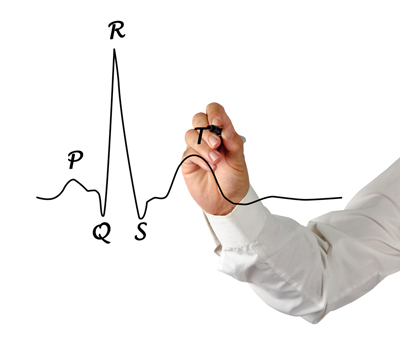
The ability to correctly interpret the ECG is a critical skill for managing patients presenting with cardiac emergencies and it is worth becoming familiar with the basic principles of ECG interpretation especially as they relate to assessment of patient with acute chest pain and arrhythmia. First things first - becoming confident to read an ECG (and feel comfortable to make highly significant clinical decisions based on the ECG) will take time - it cannot be learned in a short online tutorial or even a short face to face to face tutorial. It is like learning to drive a car - you can be shown the principles but the real learning occurs with repeated practice.
The modules in this prelearning provide a foundation for identifying major abnormalities on the ECG and introduce a system for approaching ECG Interpretation.
Find out about the TEN-360 Program
This prelearning is part of the TEN-360 program. To find more about the TEN-360 take a look at the TEN-360 course page.
TEN-360: Prelearning - Obstetric and Neonatal Emergencies 2026

TEN-360: Obstetric and Neonatal Emergencies
Emergency Birthing, The Unwell Neonate
Prelearning for Obstetric and Neonatal Emergencies
The workshop will explore two areas of acute care that are often recognised to be a causes of considerable stress and anxiety to medical and nursing staff. The workshop will explore the presentation and emergency management of a range of obstetric emergencies including severe pre-eclampsia / eclampsia, placental abruption, preterm labour, preterm prelabour rupture of membranes, complications associated with labour and birthing, and post partum haemorhage. In the the following prelearning we focus on one of these areas - the woman presenting the late stages of labour and discuss how to prepare and manage the birthing outside of a labour ward.
In the second part of the workshop we consider the unwell neonate and the prelearning introduces some of the clues and red flags for serious illness in this very little patients and outlines the clinical presentation, differential diagnosis and emergency management of life threatening illness in the neonate.
By the end of the workshop you should be a little less scared when you encounter obstetric and neonatal patients and be more confident to assess, recognise the red flags for serious disease and initiate emergency management (while waiting for help to arrive).
Find out about the TEN-360 Program
This prelearning is part of the TEN-360 program. To find more about the TEN-360 take a look at the TEN-360 course page.
TEN-360 Prelearning - Major Trauma and Burn Injury 2026

TEN-360: Major Trauma and Burn Injury
Immediate priorities in Assessment and Management
Introduction
The patient presenting following major trauma is one of the great challenges in emergency medicine. Instead of a single primary diagnosis (involving one organ system) as we are generally challenged with in managing acute medical presentations, in the patient presenting with major trauma there are often multiple diagnoses (significant injuries) that involve multiple regions or organs, many of which may be life threatening.
In the severely injured or patient it is critical to adopt a systematic approach that allows us to focus on immediate priorities and enable to identify immediate life threats and commence treatment (resuscitation). Continuing close observation and monitoring of the patient is essential as patients with major trauma may often suddenly deteriorate due to unrecognised bleeding, chest trauma or intracerebral injury.
In this prelearning we explore the immediate assessment and management of the patient presenting with major trauma and in the second module apply this systematic approach to explore the assessment and management of the patient presenting with major burn injury.
Find out about the TEN-360 Program
This prelearning is part of the TEN-360 program. To find more about the TEN-360 take a look at the TEN-360 course page.
TEN-360: Prelearning - Critically Ill Child 2026

TEN-360: Critically Ill Child
Paediatric Emergencies: Assessment and Acute Management
Introduction
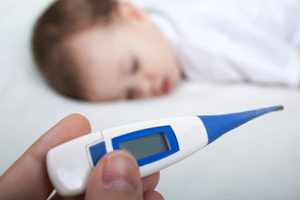
It is easy to miss the seriously ill child who presents with subtle clinical findings or to feel uncomfortable when required to manage the seriously ill child. At the workshop we will explore the signs of paediatric serious illness and the emergency management of the child fever/sepsis, surgical emergency, severe dehydration/shock, status epilepticus, trauma and severe respiratory distress.
The eLearning introduces the important principles relating to recognising and treating the seriously ill child, and provide the foundation for the clinical scenarios discussed in the workshop.
The modules are designed to be completed prior to attending the workshop. You should allow 60 - 90 mins to complete each of the modules.
The prelearning explores the following topics:
1. Red Flags for Serious Illness
2. Assessment of the Seriously Ill Child
3. Management of Paediatric Meningitis
Find out about the TEN-360 Program
This prelearning is part of the TEN-360 program. To find more about the TEN-360 take a look at the TEN-360 course page.
TEN 360: Prelearing - Wound Management Workshop 2026

TEN-360: Emergency Wound Management
Assessment, Debridement and Closure of Simple Wounds
Introduction
Latest Update: November 2025
Although simple wounds are common in acute care it is always important to begin assessment with a primary survey with the aim of exclude immediate life threats (such as severe shock). The history and examination should identify any concomitant injury(s) or disease, risk factors that may complicate wound management and assess the wound for injuries to vital tissues such as tendons, nerves and joints. The aim is to identify those wounds requiring referral due to nerve, tendon vascular, joint injury or with extensive tissue loss from the simple wounds that can using be debrided and easily closed.
In this topic we will spend some time discussing wound assessment as this needs to be undertaken carefully to avoid missing injuries to vital structures such as tendons and nerves or retained foreign bodies, which if unrecognised may be associated with significant complications and /or long term morbidity or disability. At the completion of this topic you should be confident to assess a wound for serious injury and within your scope of practice be able to debride and manage the majority of the wounds you encounter in your clinical practice.
Peter Stuart and the LearnEM Team
Find out about the TEN-360 Program
This prelearning is part of the TEN-360 program. To find more about the TEN-360 take a look at the TEN-360 course page.
TEN-360: Prelearning - Plaster Splinting and Fracture Management 2026

TEN-360 Plaster Splinting and Fracture Management
Splinting and Fracture Management: Principles, Procedure and Techniques
Plaster Splinting and Fracture Management
Plaster Splinting is central to much of fracture management and requires a set of skills to ensure a plaster that is correctly applied and avoids the risk of causing further injury.
While the practical skills for plaster casting and splinting will be covered in the workshop, there are an important set of core principles that can easily be described and provide a solid foundation to the use of plaster casting/splinting in clinical practice. These are discussed in a series of short video eTutorials.
Additional resources are available that may be used to extend learning - these include videos that demonstrate a range of plaster casts, short readings that explore the range of orthopaedic injury and links to LearnEM online courses that focus on orthopaedic injury.
Find out about the TEN-360 Program
This prelearning is part of the TEN-360 program. To find more about the TEN-360 take a look at the TEN-360 course page.
TEN- 360: Prelearning - ALS2 Workshop 2026

TEN-360: ALS-2 Prelearning
Resuscitation of the Critically Ill / Cardiac Arrest Patient
Welcome to the ALS-2 Prelearning
The ALS-2 Workshop is designed for medical and nursing staff to be accredited in the skills required for Basic and Advanced Life Support with a focus on extending the knowledge and skills in Resuscitation/Stabilisation of the critically Ill or arrested patient. The course is delivered in a supportive learning environment and uses interactive online pre-learning to cover core knowledge skills and a one day workshop for procedural skills and simulation training.
The course is suited to health professionals who wish to extend their knowledge in management of the seriously ill or deteriorating patient in the emergency setting, met call, and rural and remote environment.
Topics covered in the course include include:
-
Basic CPR and use of the AED
-
Advanced Life Support" ALS algorithm, Drugs and Charge/Check procedure
-
Assessment and Resuscitation of the Critically Ill Patient
-
Basic Airway Management
-
Acute Respiratory Distress and Non-invasive Ventilation
-
Circulatory Shock and Sepsis
-
Cardiac Arrhythmias: ECG Diagnosis, Cardiac Pacing, Cardioversion
Find out about the TEN-360 Program
This prelearning is part of the TEN-360 program. To find more about the TEN-360 take a look at the TEN-360 course page.
TEN-360: Prelearning - Newborn Advanced Life Support 2026

TEN-360: NALS Prelearning
Newborn Advanced Life Support
Newborn Advanced Life Support
The prelearning explores the guidelines for resuscitation of the newborn and the procedural skills essential to the provision of Newborn Advanced Life Support. The modules have been developed to prepare you for the face to face workshop.
Key skills that we will be exploring in the program include:
-
NALS algorithm
-
Newborn Airway management and Bag/Mask Ventilation
-
Set up and use of the Neopuff Ventilator
-
Newborn Cardiac compressions
-
Umbilical Vein Access
-
Advanced life Support medications
-
Reversible causes in NALS
-
Decompression of Tension Pneumothorax
It is our hope that you the prelearning and workshop will help to build your confidence and skills to recognise and respond to a newborn requiring resuscitation.
Find out about the TEN-360 Program
This prelearning is part of the TEN-360 program. To find more about the TEN-360 take a look at the TEN-360 course page.
TEN-360: Prelearning - Advanced Airway + Ventilation Workshop 2026

Advanced Airway and Ventilation
Procedural Skills and Simulation Workshop
Welcome to the Prelearning for Airway/Ventilation
Latest Course Update: November 2025
The airway is the first priority in the assessment and management of the seriously ill or injured patient and a secure airway is essential to protect the airway in the patient with altered conscious state and facilitate the use of mechanical ventilation. What happens early on in resuscitation may significantly determine a patient's chances of survival, risk for complications and long term disability. In this prelearning we examine the procedure and techniques for treating airway obstruction and explore the procedure for providing a definitive airway and the setup and use of mechanical ventilation.
The course explores the following topics:
1. Core principles in the assessment and management of the emergency airway
2. Preparing for definitive airway management
3. Pharmacology of the agents required in rapid sequence intubation
4. Rapid sequence intubation – procedure and complications
5. Mechanical Ventilation: Indications, Modes and Settings
6. Mechanical Ventilation in Obstructive Lung Disease
Find out about the TEN-360 Program
This prelearning is part of the TEN-360 program. To find more about the TEN-360 take a look at the TEN-360 course page.
TEN-360: Prelearning - Procedural Sedation Workshop 2026

TEN-360: Procedural Sedation Prelearning
Core Principles and Pharmacological Options
The workshop is suited to Medical, Nursing and Paramedic staff wishing to upskill in Procedural Sedation
Procedural Sedation describes the administration of drugs in a controlled setting to reduce pain and / or awareness. In the emergency department it is used for a wide variety of procedures including laceration repair, reduction and immobilisation of fractures or dislocations, incision and drainage procedures, wound exploration and removal of foreign bodies from the eye, ear, nose and skin. Procedural sedation is most often used in healthy adults and children (> 3 months) and those with mild well-controlled systemic disease (eg asthma).
The sedative agents most commonly used for procedural sedation are Midazolam +/- Fentanyl, Propofol, Ketamine and Ketofol. This course examines the indications, contraindications for procedural sedation, assessment, monitoring and after care of the patient undergoing procedural sedation and examine in detail the common drugs used for procedural sedation.
This course explores the following topics :
-
1. Parenteral Procedural Sedation : Core Principles
-
2. Intravenous Sedation using Midazolam / Fentanyl
-
3. Intravenous Sedation using Propofol
-
4. Parenteral Sedation using Ketamine
-
5. Intranasal Sedation using Midazolam, Fentanyl, Ketamine
Find out about the TEN-360 Program
This prelearning is part of the TEN-360 program. To find more about the TEN-360 take a look at the TEN-360 course page.