

TEN-360: Prelearning - ECG Interpretation 2026

TEN-360: ECG Interpretation
ECG Basics, Arrhythmias and Myocardial Ischaemia
Introduction
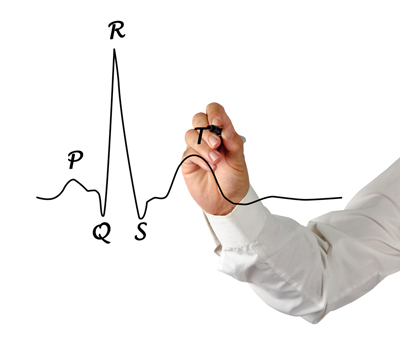
The ability to correctly interpret the ECG is a critical skill for managing patients presenting with cardiac emergencies and it is worth becoming familiar with the basic principles of ECG interpretation especially as they relate to assessment of patient with acute chest pain and arrhythmia. First things first - becoming confident to read an ECG (and feel comfortable to make highly significant clinical decisions based on the ECG) will take time - it cannot be learned in a short online tutorial or even a short face to face to face tutorial. It is like learning to drive a car - you can be shown the principles but the real learning occurs with repeated practice.
The modules in this prelearning provide a foundation for identifying major abnormalities on the ECG and introduce a system for approaching ECG Interpretation.
Find out about the TEN-360 Program
This prelearning is part of the TEN-360 program. To find more about the TEN-360 take a look at the TEN-360 course page.
TEN-360: Prelearning - Obstetric and Neonatal Emergencies 2026

TEN-360: Obstetric and Neonatal Emergencies
Emergency Birthing, The Unwell Neonate
Prelearning for Obstetric and Neonatal Emergencies
The workshop will explore two areas of acute care that are often recognised to be a causes of considerable stress and anxiety to medical and nursing staff. The workshop will explore the presentation and emergency management of a range of obstetric emergencies including severe pre-eclampsia / eclampsia, placental abruption, preterm labour, preterm prelabour rupture of membranes, complications associated with labour and birthing, and post partum haemorhage. In the the following prelearning we focus on one of these areas - the woman presenting the late stages of labour and discuss how to prepare and manage the birthing outside of a labour ward.
In the second part of the workshop we consider the unwell neonate and the prelearning introduces some of the clues and red flags for serious illness in this very little patients and outlines the clinical presentation, differential diagnosis and emergency management of life threatening illness in the neonate.
By the end of the workshop you should be a little less scared when you encounter obstetric and neonatal patients and be more confident to assess, recognise the red flags for serious disease and initiate emergency management (while waiting for help to arrive).
Find out about the TEN-360 Program
This prelearning is part of the TEN-360 program. To find more about the TEN-360 take a look at the TEN-360 course page.
TEN-360 Prelearning - Major Trauma and Burn Injury 2026

TEN-360: Major Trauma and Burn Injury
Immediate priorities in Assessment and Management
Introduction
The patient presenting following major trauma is one of the great challenges in emergency medicine. Instead of a single primary diagnosis (involving one organ system) as we are generally challenged with in managing acute medical presentations, in the patient presenting with major trauma there are often multiple diagnoses (significant injuries) that involve multiple regions or organs, many of which may be life threatening.
In the severely injured or patient it is critical to adopt a systematic approach that allows us to focus on immediate priorities and enable to identify immediate life threats and commence treatment (resuscitation). Continuing close observation and monitoring of the patient is essential as patients with major trauma may often suddenly deteriorate due to unrecognised bleeding, chest trauma or intracerebral injury.
In this prelearning we explore the immediate assessment and management of the patient presenting with major trauma and in the second module apply this systematic approach to explore the assessment and management of the patient presenting with major burn injury.
Find out about the TEN-360 Program
This prelearning is part of the TEN-360 program. To find more about the TEN-360 take a look at the TEN-360 course page.
TEN-360: Prelearning - Critically Ill Child 2026

TEN-360: Critically Ill Child
Paediatric Emergencies: Assessment and Acute Management
Introduction
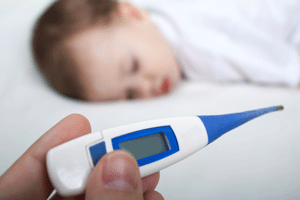
It is easy to miss the seriously ill child who presents with subtle clinical findings or to feel uncomfortable when required to manage the seriously ill child. At the workshop we will explore the signs of paediatric serious illness and the emergency management of the child fever/sepsis, surgical emergency, severe dehydration/shock, status epilepticus, trauma and severe respiratory distress.
The eLearning introduces the important principles relating to recognising and treating the seriously ill child, and provide the foundation for the clinical scenarios discussed in the workshop.
The modules are designed to be completed prior to attending the workshop. You should allow 60 - 90 mins to complete each of the modules.
The prelearning explores the following topics:
1. Red Flags for Serious Illness
2. Assessment of the Seriously Ill Child
3. Management of Paediatric Meningitis
Find out about the TEN-360 Program
This prelearning is part of the TEN-360 program. To find more about the TEN-360 take a look at the TEN-360 course page.